Moving From Boston To Stoughton: A Practical Guide
July 2, 2026
July 2, 2026
Thinking about leaving Boston for more space, easier parking, and a different daily rhythm? You are not alone. A move from Boston to Stoughton can offer a meaningful lifestyle shift, but it also comes with tradeoffs that are worth understanding before you make a decision. This guide will help you compare housing, commute patterns, and move timing so you can plan with confidence. Let’s dive in.
Stoughton and Boston offer very different living environments. Census data estimates Stoughton at 29,457 residents in 2024, compared with 673,458 in Boston. It is also far less dense, with about 1,820.3 people per square mile in Stoughton versus 13,976.7 in Boston.
That difference often shows up in the way a move feels day to day. In Boston, many households are used to compact living, tighter parking, and a more walkable urban layout. In Stoughton, the setting is typically less crowded, which can appeal if you want a little more breathing room.
Another notable shift is homeownership. Stoughton has an owner-occupied housing rate of 77.3%, while Boston is at 35.7%. That does not define any one neighborhood or household, but it does show how different the housing landscape is between the two communities.
For many Boston movers, the biggest draw is simple: space. Stoughton households average 2.65 persons per household, compared with 2.19 in Boston. While that number does not tell the full story, it supports the idea that Stoughton often fits households looking for a different layout or more room to spread out.
Town planning documents describe Stoughton as a predominantly single-family housing market. One master plan summary says about 75% of the housing stock is single-family and 19% is condominiums, while a housing production plan reported 61.1% detached single-family homes in 2017, with the rest spread across attached homes, two-family homes, and larger multifamily buildings.
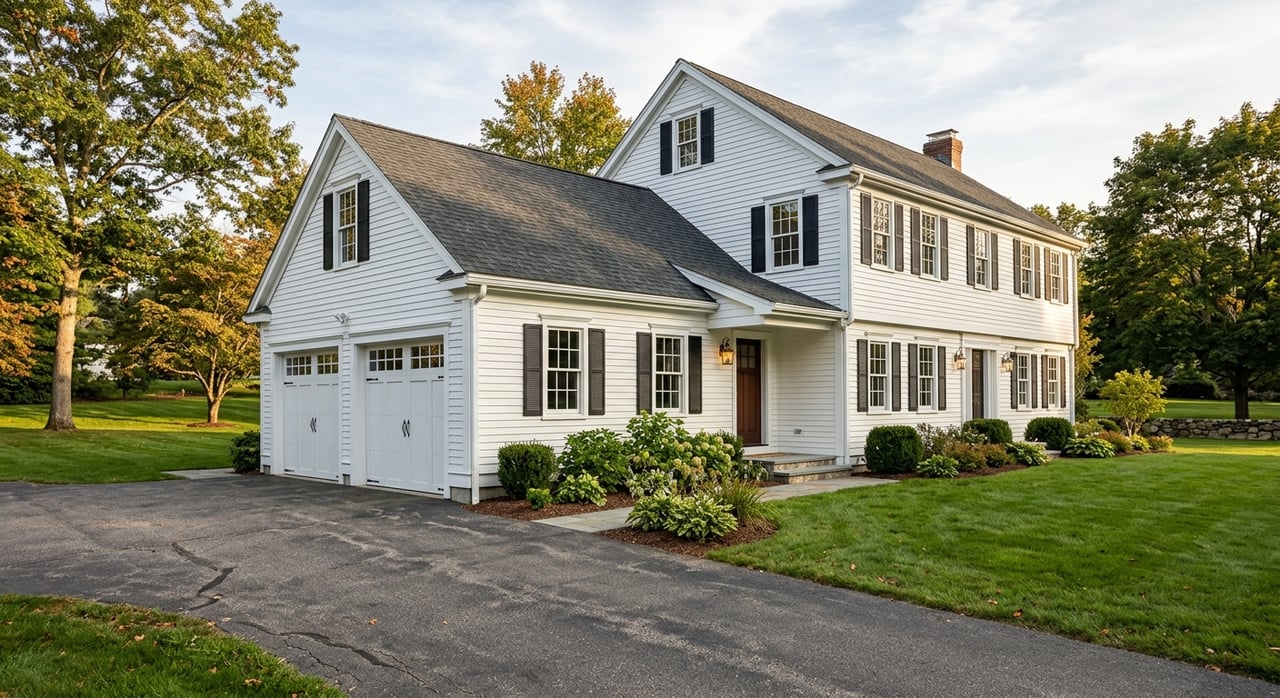
The exact percentages vary by document and year, but the broad pattern is consistent. Compared with Boston, Stoughton has a much stronger detached-house presence. In practical terms, that can mean a better chance of finding features like a driveway, garage, basement, yard, or extra storage, though of course it depends on the specific property.
One reason city buyers consider Stoughton is the price gap. Census figures show a median owner-occupied home value of $496,700 in Stoughton, compared with $731,700 in Boston. That difference helps explain why many buyers see Stoughton as a place where their budget may stretch further.
Recent market trackers point to a similar range. Zillow reported a median sale price of $491,650 in Stoughton in April 2026, while Redfin reported $549,000 over the prior three months and Realtor.com showed a median listing price around $556,000 in May. For Boston, Redfin reported a median sale price of $852,000 over the prior three months, and Realtor.com showed a median listing price of $889,000 in May.
No single number tells the whole story, and pricing can vary by property type, condition, and timing. Still, the broader pattern is clear: Boston buyers often look to Stoughton because the local market may offer a different value equation.
If you are not ready to buy right away, renting may also be part of your move strategy. Census data shows median gross rent at $1,993 in Stoughton and $2,147 in Boston. That is not a huge gap compared with the home value difference, but it may still matter if you need a short-term landing spot.
A rental can be especially useful if you want more time to shop carefully or if your sale and purchase dates do not line up. It can also help you get to know Stoughton before committing to a purchase. For some households, that flexibility can reduce pressure during a move.
One of the most important questions is whether you can still get into Boston easily. Town planning materials describe Stoughton Station as the terminal stop on the Providence/Stoughton Line, with service to South Station and multiple trains during peak commuter hours. That gives many Boston-bound commuters a rail option instead of relying only on driving.
Parking is part of that equation too. Current MBTA parking information lists Stoughton station parking at $4 on weekdays and $2 on weekends, with no overnight parking. That setup can work well for day-to-day commuting, but it is not meant for long-term car storage.
Commute expectations should stay realistic. The Census Bureau reports mean travel time to work of 32.2 minutes in Stoughton and 30.3 minutes in Boston. That does not mean every commute is similar, but it does suggest that moving to Stoughton does not automatically create a shorter trip. More often, it changes the commute pattern, with a mix of driving, train travel, and station parking.
A move from Boston to Stoughton is often a trade of convenience for space. In Boston, you may be used to having more destinations close together and a denser urban environment. In Stoughton, you are more likely to find a housing stock that supports larger living areas and more private outdoor or storage space.
That trade can be a smart one if your priorities have shifted. Maybe you want room for a home office, easier parking, or a property that better fits your next chapter. The key is to define what matters most to you before you begin touring homes.
If you already own in Boston, timing your move is one of the biggest planning decisions. Consumer guidance from the CFPB says that if you want to move, you normally try to sell your current home first before buying another one. That approach can reduce the risk of carrying two homes at once.
There are situations where buying first can make sense, but it is not always the simplest path. Your budget, financing, and comfort with timing risk all matter. If you are planning both a sale and a purchase, it helps to map out your options early so you can move with less stress.
Once you are ready to shop seriously, preapproval matters. The CFPB notes that sellers often require a preapproval letter and that these letters often expire in 30 to 60 days. That means timing is important.
If you get preapproved too early, you may need updates before you are ready to make an offer. If you wait too long, you may lose valuable time when the right home appears. A clear plan can help you line up financing with your search.
It is easy to focus only on the down payment or monthly payment, but moving costs go beyond that. CFPB guidance advises buyers to be prepared for closing costs, moving expenses, repairs, insurance, and property taxes. Those items can add up quickly if you do not plan ahead.
If you are comparing Boston and Stoughton, think about your full monthly picture and your upfront cash needs. A home that looks affordable at first glance can feel very different once you include all the related expenses. A complete budget gives you better decision-making power.
Even if a home looks move-in ready, a professional inspection is still an important step. HUD advises buyers to get a professional home inspection before purchase. This helps you understand the condition of the property before you close.
For Boston buyers moving into a detached home, this can be especially helpful. A house may come with systems and maintenance items that feel different from condo or apartment living. Knowing what you are buying can help you avoid surprises and plan future upkeep.
Sometimes the cleanest move is not a direct sale-to-purchase handoff. If timing does not line up, a short-term rental can be a practical bridge. CFPB guidance notes that the rent-versus-buy decision depends in part on how long you expect to stay in the home, which supports the idea that a temporary rental may be useful during a short transition.
This option can give you breathing room. You may be able to sell first, protect your buying position, and then search in Stoughton without feeling rushed. For some households, that flexibility is worth the extra step.
If you are thinking about moving from Boston to Stoughton, start by getting clear on your priorities. Ask yourself what you want more of, what you are willing to give up, and how your commute needs fit into the picture. That clarity will shape the right strategy.
It also helps to work with someone who understands both the city-to-suburb transition and the local market across Greater Boston and the South Shore. When your move involves selling, buying, or possibly renting in between, good planning can make a major difference in both your stress level and your outcome.
If you are weighing a move from Boston to Stoughton and want calm, practical guidance through each step, connect with Kattia Ira for thoughtful support tailored to your next move.
Stay up to date on the latest real estate trends.



Your trusted real estate expert. Specializing in an array of properties to meet your needs. Contact Kattia today to start your home searching journey!

OFFICE HOURS
7am to 9pm
ADDRESS
472A Washington St
Boston MA 02124